

Special guests
During our research in June, we were able to discover some exciting species that are only rarely found in the study area. Time and again, alpine species stray into our sites – even though our work never takes us above 1,400 meters in elevation.
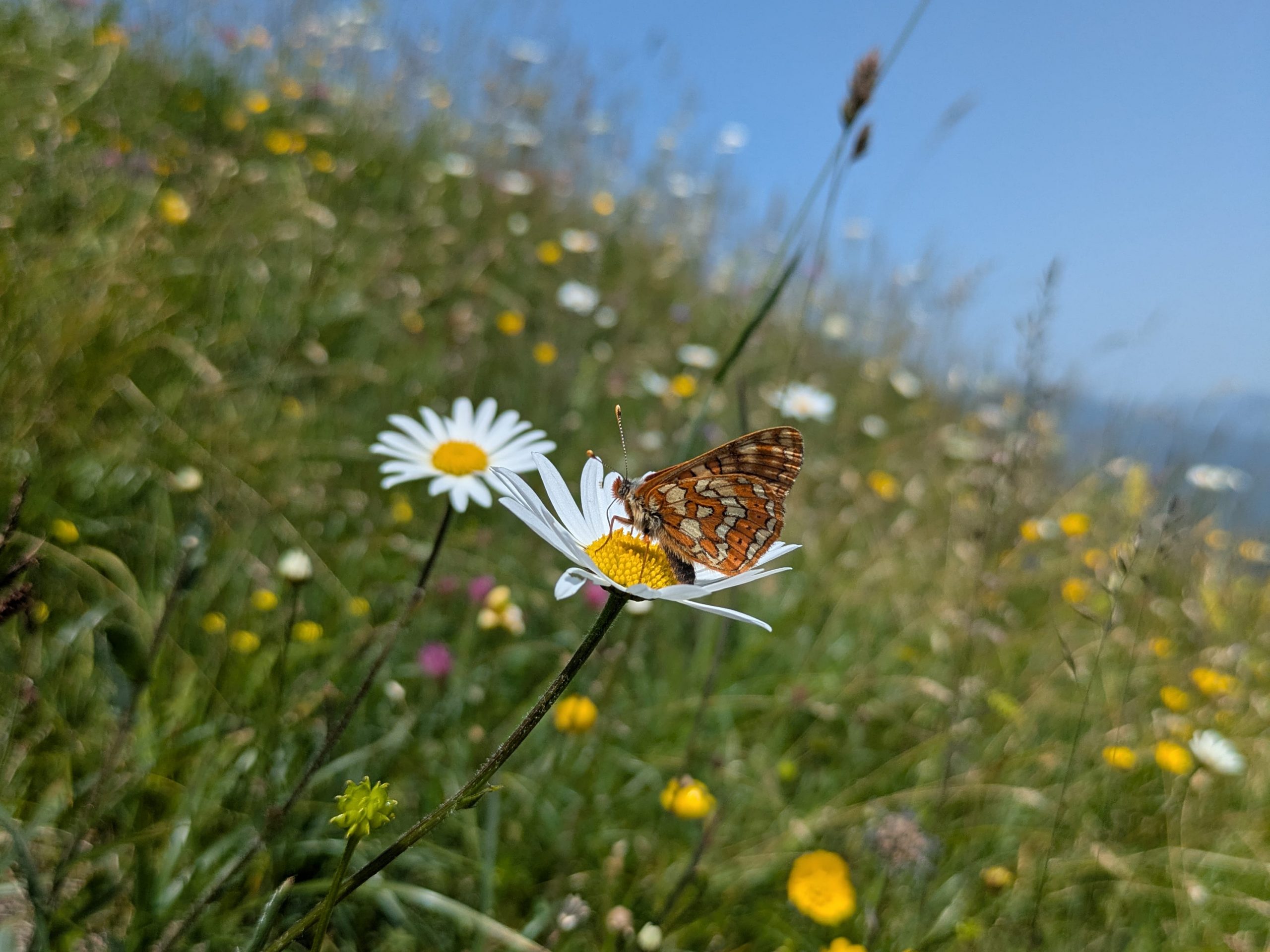
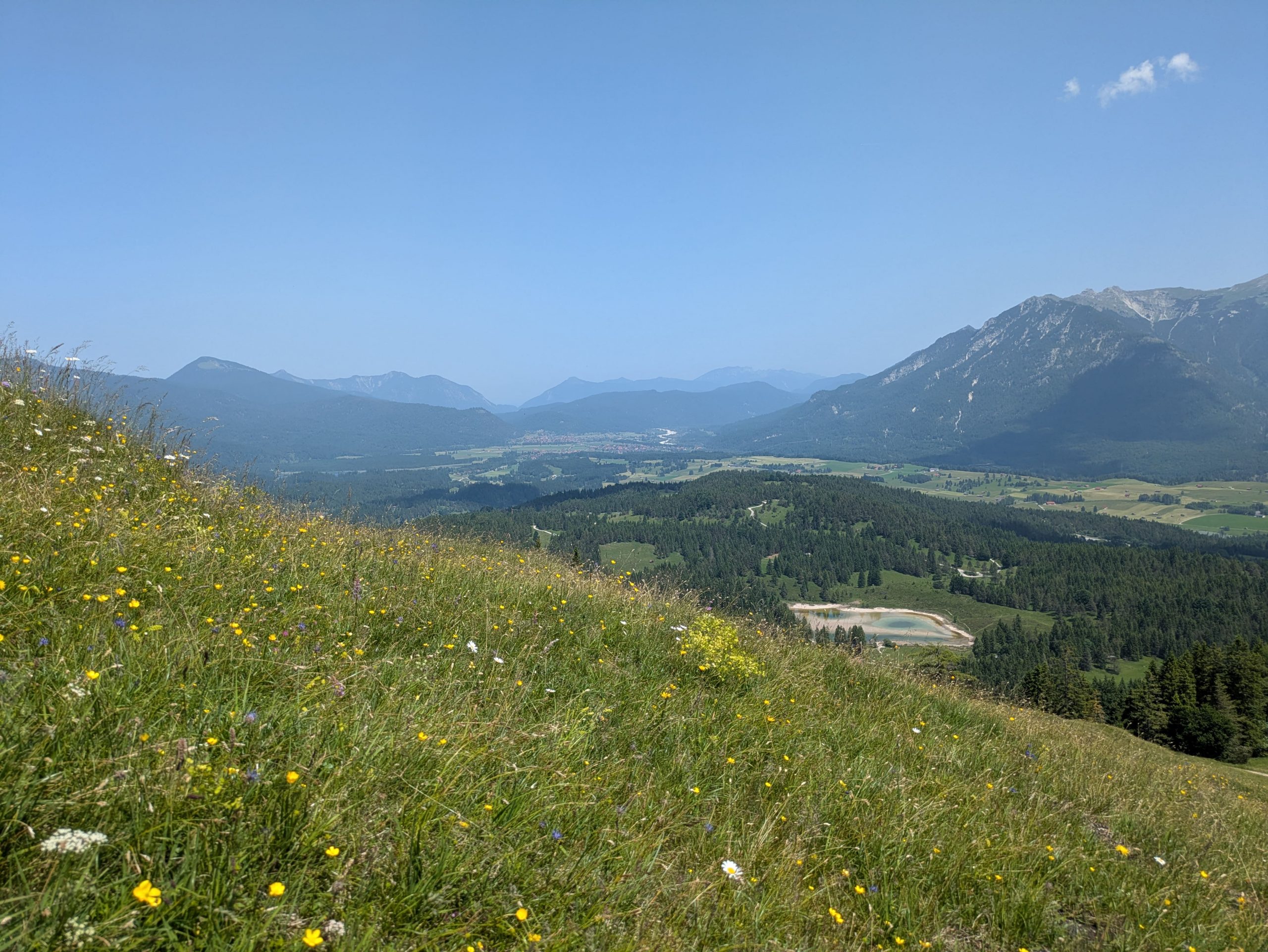
Several of our restoration areas on the Kranzberg lie close to the summit at around 1,350 m. Here, on June 14, 2025, we observed a male Cynthia’s Fritillary (Euphydryas cynthia). The species is difficult to distinguish from the Marsh Fritillary (Euphydryas aurinia) based on the underside of the wings (see Figure 1). However, as soon as the strikingly patterned upperside of the wings is visible, Cynthia’s Fritillary is unmistakable.
The butterfly impressively displayed its typical hilltopping behavior – circling in nearly identical loops at the summit. The encounter was especially remarkable because the species normally occurs regularly only between 1,500 and 2,000 m. On the Kranzberg, however, the summit ends already at about 1,350 m, and the larval host plant, Alpine Plantain (Plantago alpina), is also absent there. Even if it was probably a chance encounter, it was still breathtaking to observe this fascinating butterfly in our study area.
Just one day later, we were near the Isar and at just 1,000 m we encountered another male Cynthia’s Fritillary. It is possible that the local population was particularly strong this year, leading to more frequent migration movements during the warm June days.
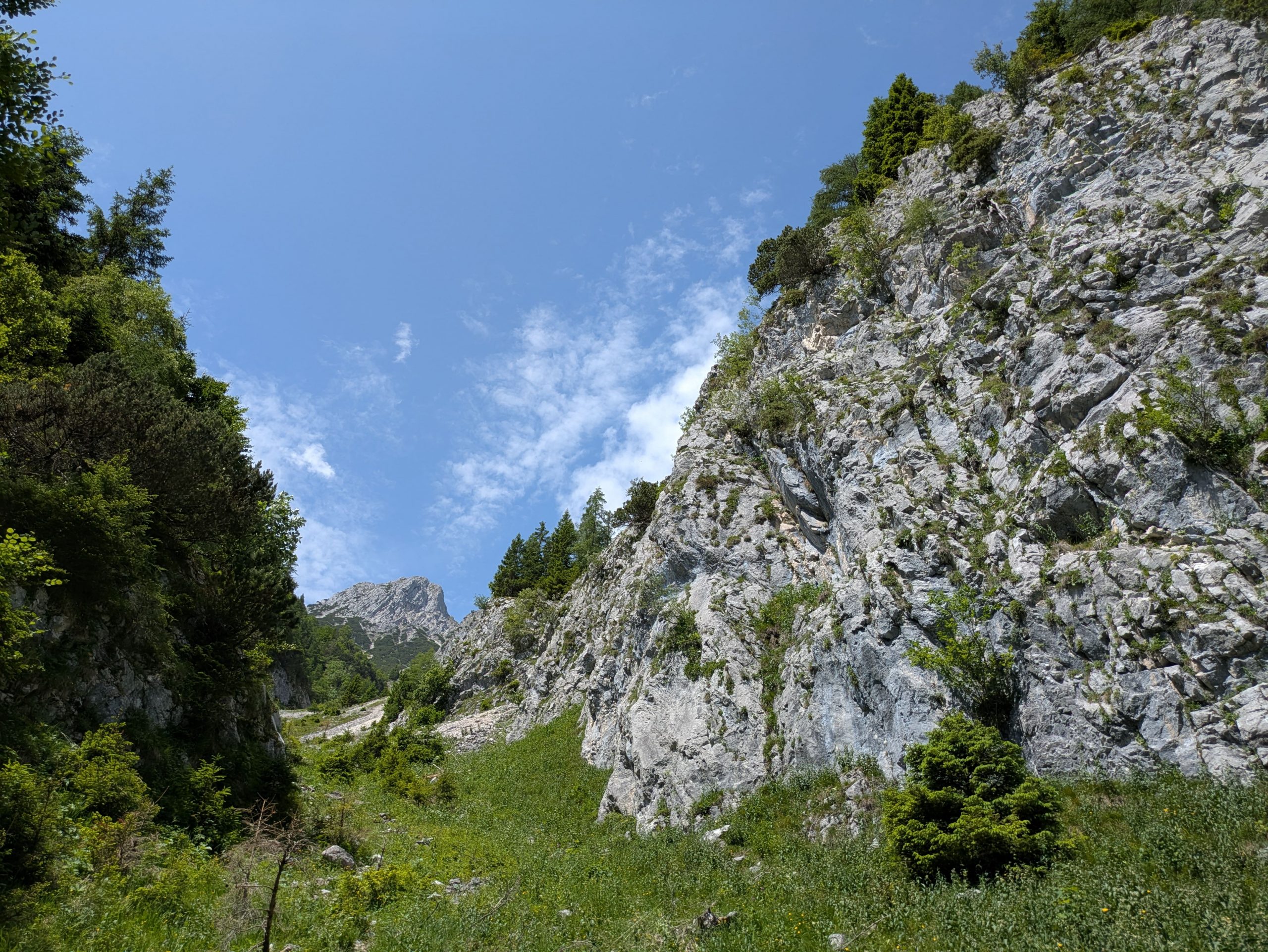
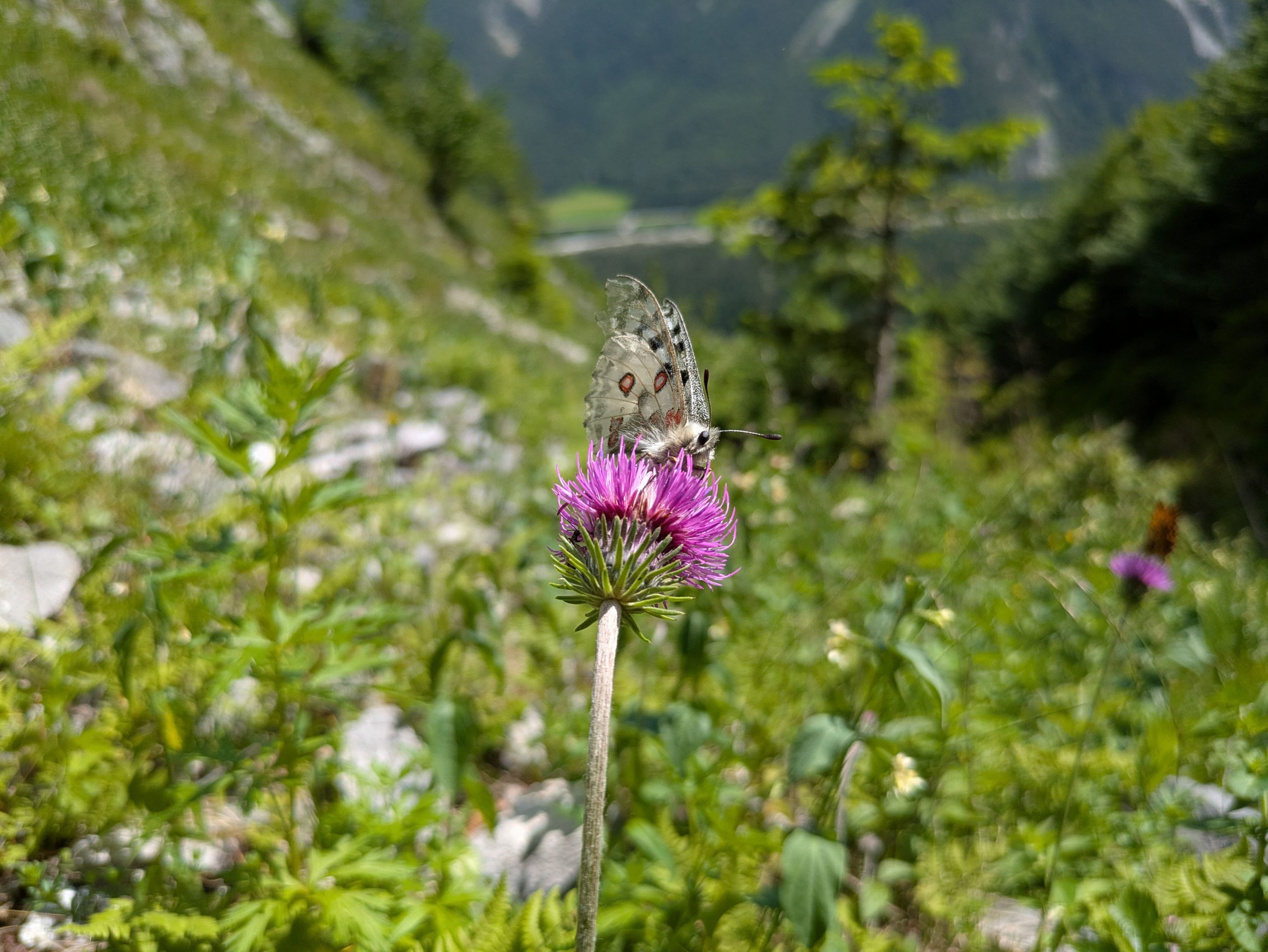
We followed the butterfly to a scree slope and climbed up to about 1,200 m, until the slope was largely free of trees. There we found numerous flowering Alpine Thistles (Carduus defloratus) and Swallow-wort (Vincetoxicum hirundinaria). With the abundance of flowers, the number of butterflies also increased sharply.
Particularly impressive was the observation of several Apollo butterflies (Parnassius apollo). These large butterflies used the thermal currents, gliding down the slope in long sweeps and then rising again. We were very surprised to see them occurring at such a low elevation.
Thanks to the good weather, butterfly diversity in June was particularly high this year. It was a joy to experience the beauty of Alpine butterflies up close in our study area.