

Let There Be Light – Restoration Work Has Begun
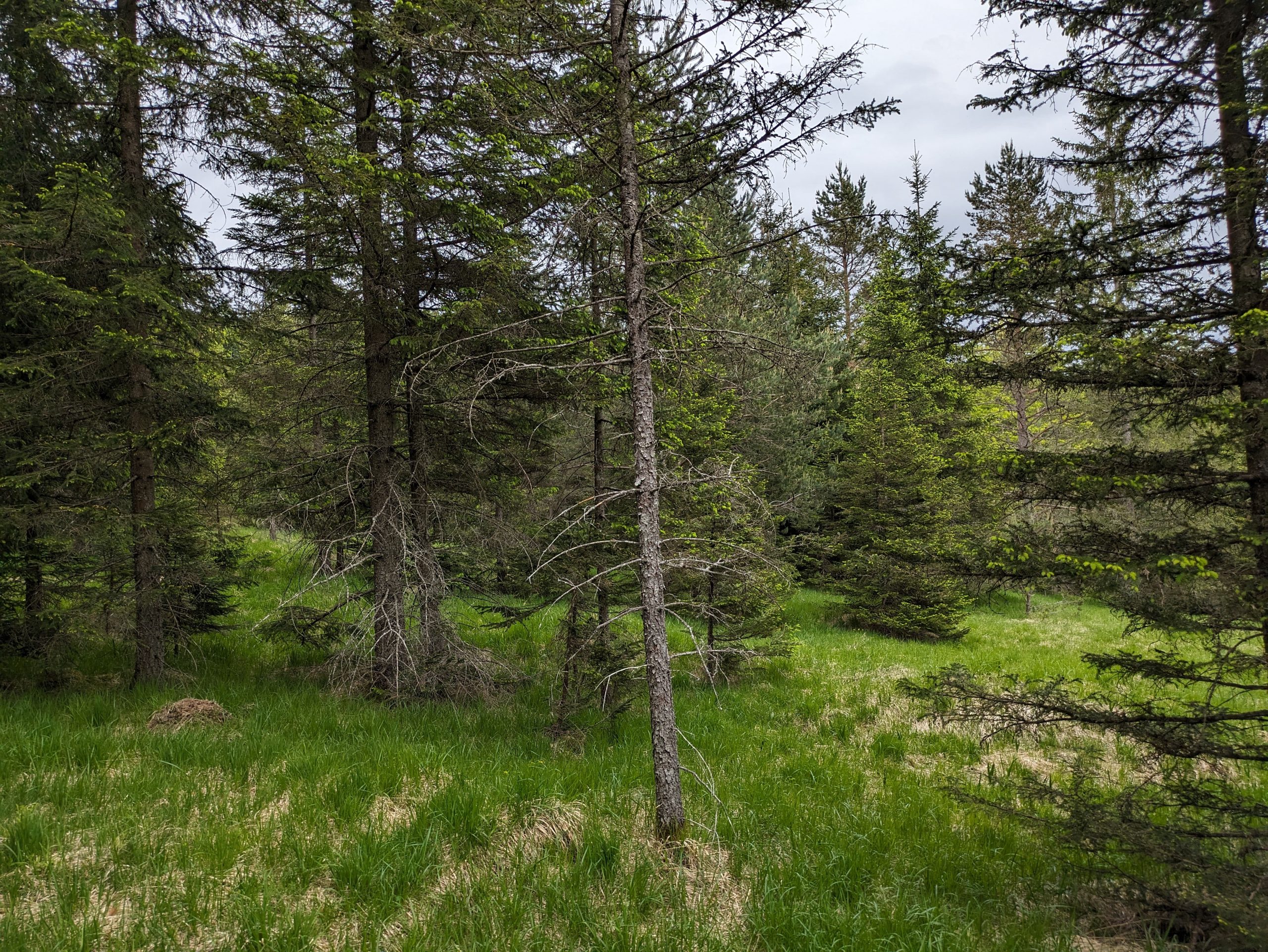
One of the greatest threats to the biodiversity of species-rich grassland habitats today is the decline of extensive, often traditional land-use practices. In the absence of regular management, natural succession processes quickly set in, and within just a few decades, the once colorful and structurally diverse areas become overgrown with shrubs and trees. As these open habitats disappear, so too does their characteristic flora and fauna.
This fate has already affected many calcareous grasslands and some calcareous fens within the project area in the Niederwerdenfelser Land. Although the area remains one of Germany’s biodiversity hotspots, a significant portion of its valuable open habitats has already been lost.
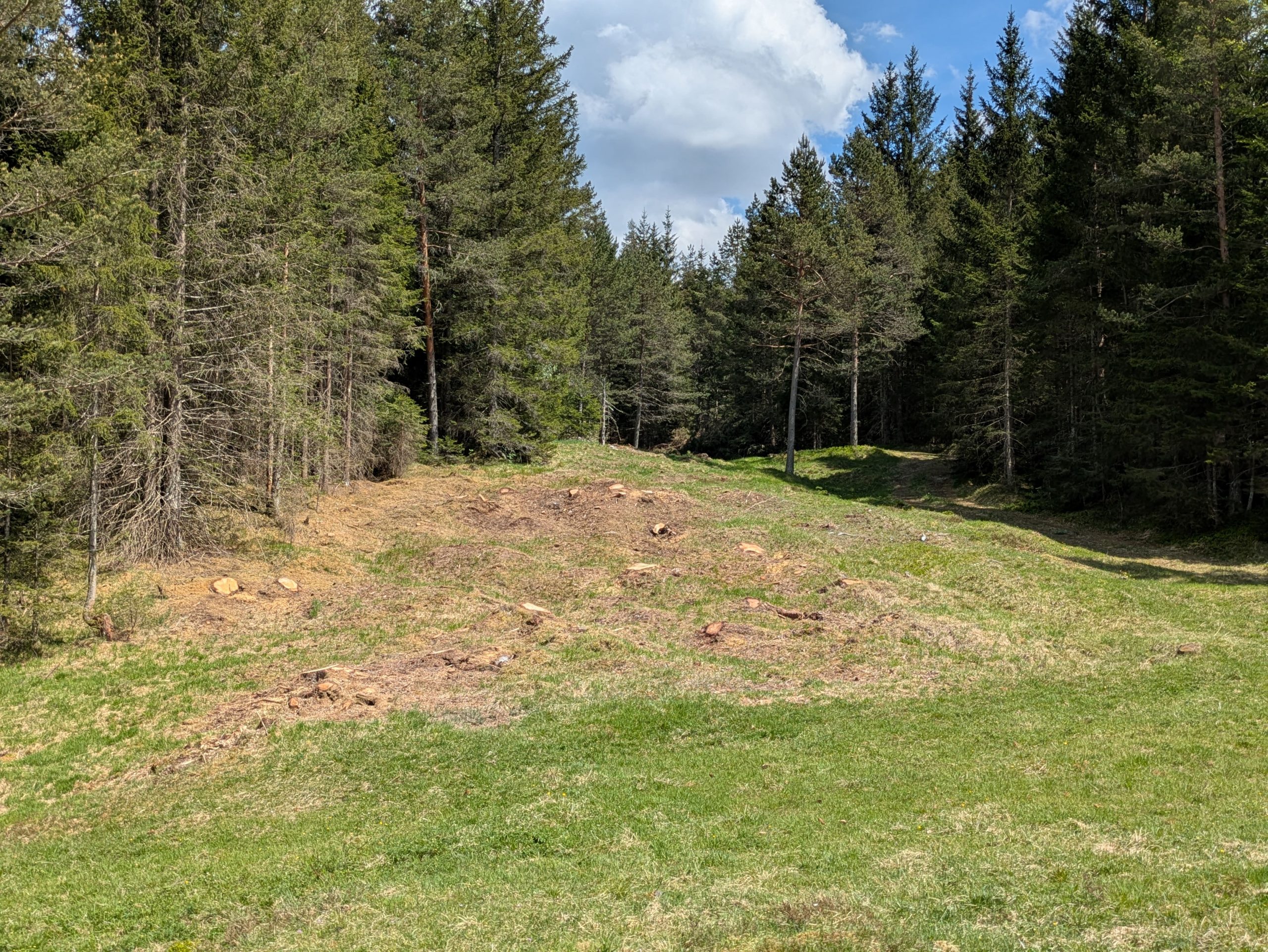
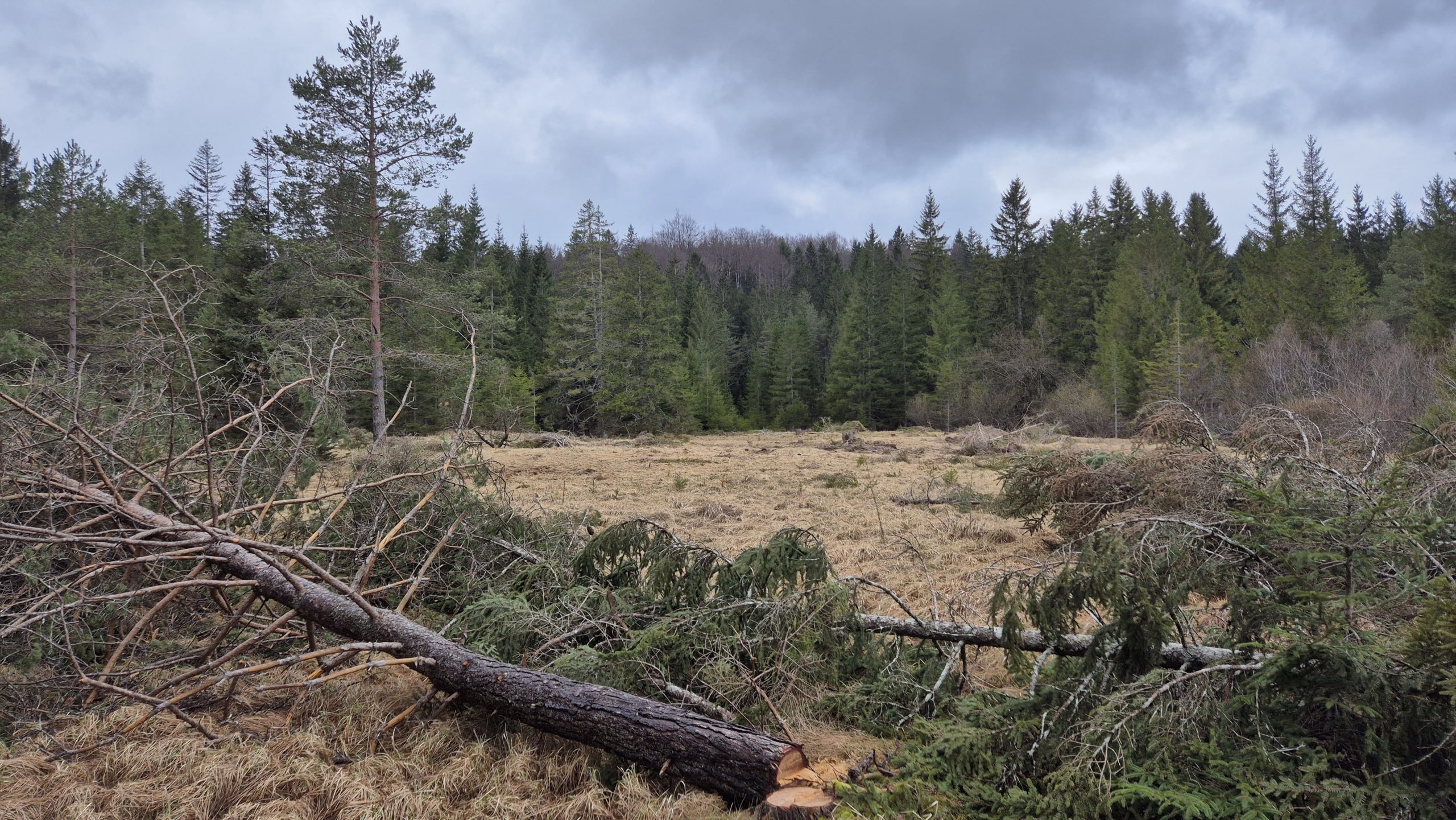
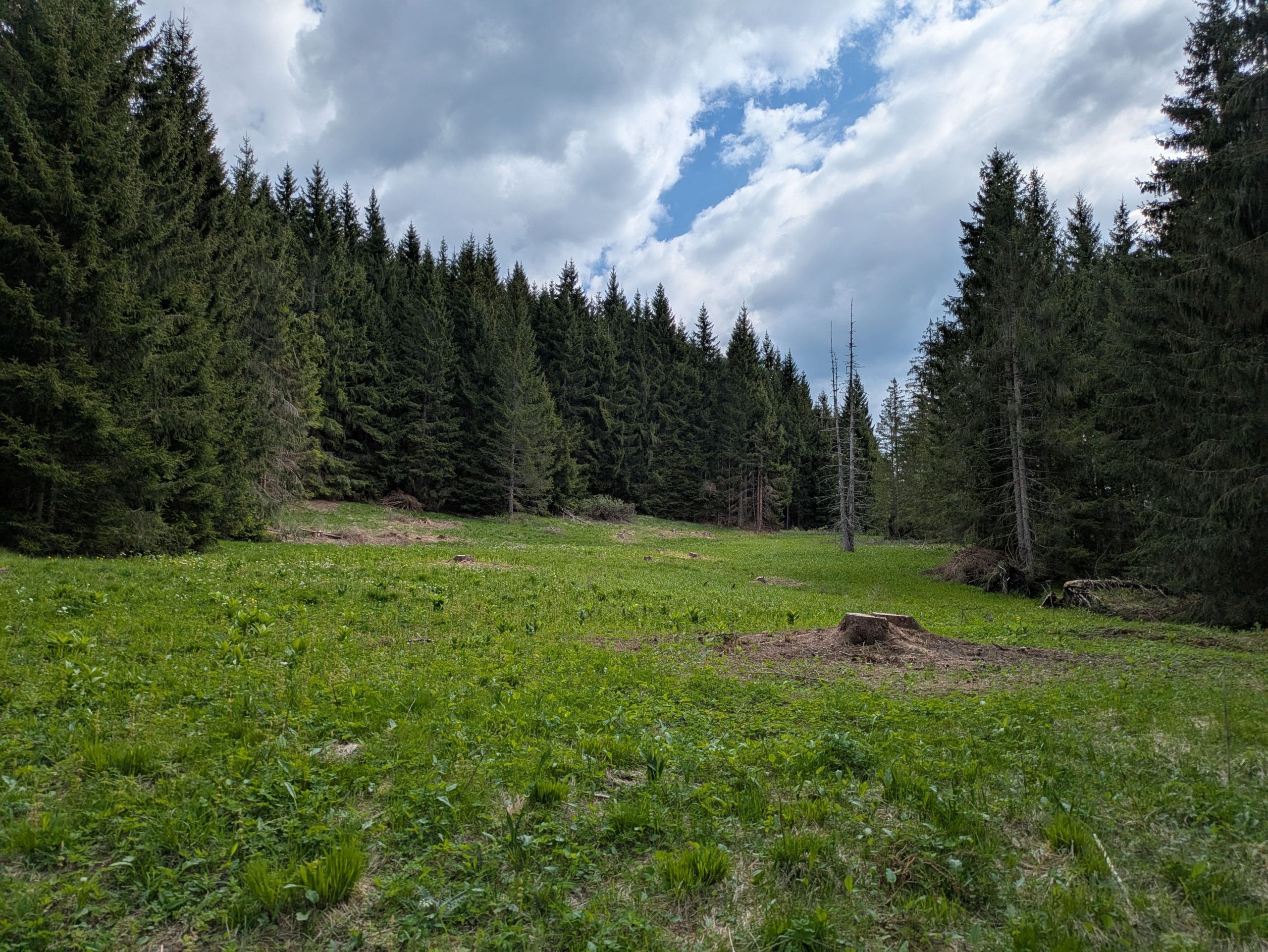
Through our project, we are implementing targeted measures to restore overgrown grasslands and counteract this ongoing decline. The focus is on creating suitable habitat for the Marsh Fritillary (Euphydryas aurinia), a species that inhabits both dry calcareous grasslands and wet calcareous fens in our project area. Thanks to their position in valleys and low-lying areas, the fens also serve an important function as ecological corridors – not only for the Marsh Fritillary, but for many other endangered species as well.
Various types of equipment are used for clearing the overgrowth. However, due to the often difficult-to-access locations of many sites, a significant amount of manual labor is also required. The effort involved varies greatly depending on the stage of succession: while spruce trees on the higher slopes of the Kranzberg are still relatively small, those on the moister, lower-lying areas have already reached heights of over 20 meters in the same time period.
Fortunately, we are receiving strong support from the local community. Many committed individuals from the region are actively involved in the restoration work – often driven by the desire to bring the landscape back closer to what it looked like in their childhood, when the traditional “Wiesmahd” (meadow mowing) was still widely practiced.
Dieses Schicksal hat bereits viele Kalkmagerrasen und einige Kalkflachmoore im Projektgebiet im Niederwerdenfelser Land ereilt. Obwohl das Gebiet nach wie vor zu den Biodiversitätshotspots Deutschlands zählt, ist ein erheblicher Teil der wertvollen Offenlandflächen inzwischen verloren gegangen.
Im Rahmen unseres Projekts setzen wir gezielte Maßnahmen zur Wiederherstellung verbuschter Magerrasen um, um dem fortschreitenden Verlust entgegenzuwirken. Im Fokus steht dabei der Lebensraum des Goldenen Scheckenfalters (Euphydryas aurinia), der in unserem Projektgebiet sowohl auf trockenen Kalkmagerrasen als auch in feuchten Kalkflachmooren vorkommt. Letztere übernehmen zudem aufgrund ihrer Lage häufig eine wichtige Funktion als ökologische Korridore – nicht nur für den Goldenen Scheckenfalter, sondern auch für zahlreiche weitere gefährdete Arten.
Für die Entbuschung kommen unterschiedliche Geräte zum Einsatz. Aufgrund der teils schwer zugänglichen Lagen vieler Flächen ist jedoch auch viel Handarbeit notwendig. Zudem unterscheidet sich der Arbeitsaufwand je nach Sukzessionsstadium deutlich. Während am höher gelegenen Kranzberg die Fichten häufig noch klein sind, haben die Bäume auf frischeren und tiefer gelegenen Flächen im selben Zeitraum bereits über 20 Meter erreicht.
Erfreulicherweise stoßen wir auf große Unterstützung in der Region. Viele engagierte Menschen aus der lokalen Bevölkerung beteiligen sich aktiv an den Pflegearbeiten – nicht selten mit dem Wunsch, die Landschaft wieder näher an das Bild ihrer Kindheit heranzuführen, als die heute noch praktizierte „Wiesmahd“ weit verbreitet war.